
 info[at]tellostec.de
Introduction
In today’s digital era, technologies are developing rapidly and shaping our everyday lives in many different ways. One of the most remarkable developments in recent years is the smart home. A smart home integrates various technologies to increase living comfort, security and energy efficiency. But how exactly do smart homes make our everyday lives easier? What technologies are behind them and what advantages do they offer? We will answer these questions in detail in this article.
What is a smart home?
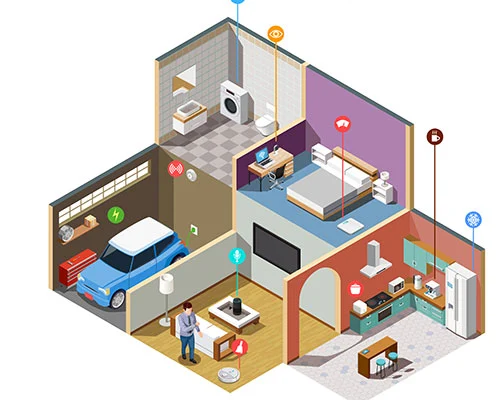
A smart home refers to a living environment that is equipped with networked devices and systems that can communicate and be controlled via the internet. These devices and systems are designed to automate daily tasks, optimize energy consumption and increase safety.
Technologies in the smart home
1. smart lighting
Smart lighting systems make it possible to control the lighting in your home via an app on your smartphone or by voice command. These systems not only offer convenience, but also energy-saving potential. For example, you can program the lights to switch on and off at certain times or adjust the brightness depending on the time of day and activities.
2. smart thermostats
Smart thermostats such as the Nest Learning Thermostat or Ecobee can control your heating and cooling systems efficiently. They learn your preferences and habits and automatically adjust the temperature to maximize comfort and save energy at the same time. These thermostats can also be controlled via your smartphone so that you can adjust the temperature when you are not at home.
3. security systems
Intelligent security systems are another key component of a smart home. These include surveillance cameras, door and window sensors, motion detectors and smart door locks. These systems can be networked with each other to provide comprehensive protection. You can use an app to monitor your home in real time, receive alarms and even lock or open doors remotely.
4. smart home hubs and voice assistants
At the heart of many smart homes are smart home hubs and voice assistants such as Amazon Echo (with Alexa), Google Home or Apple HomePod. These devices enable the central control of various smart devices and systems. You can use voice commands to play music, control lights and thermostats, create shopping lists and much more.
5. household appliances
Household appliances are also getting smarter. From fridges that plan your shopping and suggest recipes to washing machines that can be controlled via an app – the integration of smart technologies in household appliances offers a wide range of convenience and efficiency benefits.
Advantages of smart homes
1. comfort and convenience
Smart homes offer a high level of comfort and convenience. With just one tap or voice command, you can control the lighting, temperature, entertainment systems and more. This is particularly useful for people with limited mobility or for those who want a stress-free and efficient life.
2. energy efficiency and cost savings
One of the biggest advantages of smart homes is the improvement in energy efficiency. Intelligent thermostats, lighting systems and energy-efficient appliances help to optimize energy consumption and reduce electricity bills. Automated systems ensure that appliances only run when they are actually needed.
3. increased security
The integration of intelligent security systems offers comprehensive protection for your home. Real-time monitoring and the ability to receive alarms and notifications allow you to react quickly to potential threats. Smart door locks and surveillance cameras offer additional security and provide peace of mind.
4. remote control and automation
A key advantage of smart homes is the ability to control and automate various systems and devices remotely. You can adjust the temperature, switch the lights on and off, lock doors and much more, even when you are not at home. This not only offers convenience, but also security, as you can always keep an eye on your home.
5. improved quality of life
By automating and integrating various systems, smart homes contribute to an improved quality of life. They save time, reduce stress and allow you to concentrate on more important things. They can also make everyday life much easier for people with special needs or disabilities.
Challenges and considerations
Although smart homes offer many benefits, there are also some challenges and considerations. Data protection and security are important aspects, as networked devices can potentially be vulnerable to cyber attacks. It is important to implement robust security measures and carry out regular software updates. In addition, the initial cost of setting up a smart home can be high, although this investment can pay off in the long term through energy savings and increased comfort.
Conclusion
Smart homes offer a wide range of technologies that can make our everyday lives easier and better. From lighting and temperature control to intelligent security systems and networked household appliances – the possibilities are virtually endless. The benefits range from increased comfort and energy efficiency to improved safety and quality of life. Despite some challenges and considerations, the future of smart homes is promising and offers exciting prospects for smarter and more efficient living.

